
I remember driving my grandfather home from a doctor's appointment. I was about sixteen and had recently gotten my learner's permit.
We called him Gran.
He had survived the Great Depression—he told me things about it that were difficult even to imagine—and served in World War II with the 29th Infantry Division, although a medical condition kept him out of direct combat. He worked on the railroad, raised four children, and spent much of his life doing whatever was necessary to provide for his family. He was as tough and stoic a man as I have ever known.
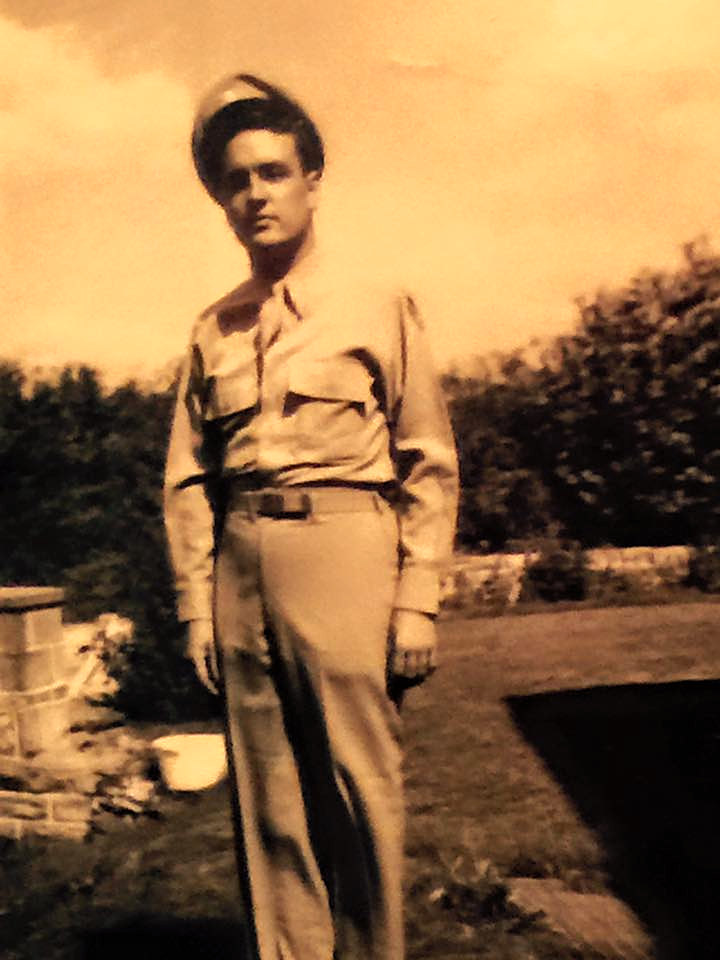
I had dropped out of high school partly to remain close to my grandparents. Their health was declining, and there had been discussions about moving them into a care facility. I wanted to spend whatever time I could with them.
That afternoon, as we sat in his car outside his house, Gran said something I have never forgotten:
"I hope that you don't end up like ol' Gran, workin' your whole life for nothin'."
The vulnerability in his voice startled me. This was not a man who complained about hardship. His children had grown into successful adults, and in time he would leave a little to each of them and to each of his grandchildren.
His life had not been for nothing.
But I understood that he was speaking about something different. I sensed that he was thinking about the possibilities he had once imagined for himself, the obligations that had intervened, and the time he could never recover.
There are things you can recover from in life.
Time is not one of them.
Gran had another lesson for me: delayed gratification. He believed that a person could enjoy their early years and risk working out of necessity for the rest of their life—or work hard while young in pursuit of greater freedom later.
I had been doing a great deal of the former.
He wasn't offering me a guarantee. He was asking me to understand that the way I spent the years ahead could determine how much freedom I would have in the years that followed. For the first time, I considered taking complete responsibility for the direction of my life.
There's an old saying that the two most important days of your life are the day you are born and the day you discover why. I have never been entirely satisfied with that.
You can discover your purpose and do absolutely nothing about it. You can recognize your potential and spend decades finding reasons not to test it. You can have a bold ambition and surrender as soon as pursuing it becomes truly difficult. I believe the second most important day of your life is the day you understand the magnitude of what stands between you and the future you want—and recognize that no one else can assume responsibility for getting you there.
The cavalry isn't coming.
The Price of an Extraordinary Life
Most people dramatically underestimate the difficulty of achieving something extraordinary. They imagine the accomplishment. They imagine the freedom, the recognition, the financial independence, or the satisfaction of having built something that matters. They rarely imagine the full price.
They imagine working hard. They don't imagine working hard for years and having almost nothing to show for it. They imagine taking risks. They don't imagine losing everything they thought they had secured, rebuilding, and discovering that the new foundation is just as vulnerable as the old one. They imagine being misunderstood. They don't imagine what it feels like when the people whose opinions matter most cannot understand why they are making the sacrifices they make. And almost nobody imagines how many times the person pursuing the ambition may need to change.
There is a comforting belief that determination is sufficient. Work hard, remain positive, refuse to quit, and eventually success will arrive. It is not true. The world does not owe you a favorable outcome because you worked for one. Intelligence does not guarantee success. Neither does talent, preparation, sacrifice, or courage. You can do everything you reasonably know how to do and still fail.
You can also work with astonishing determination toward an objective that your own methods make impossible to achieve. That is a particularly dangerous form of failure because it allows you to confuse effort with progress. If your goal requires you to become more capable, more disciplined, better informed, or more resilient, then continuing to behave exactly as you do today may be the surest way to ensure that you never reach it.
The person you are today may not be capable of achieving what you want tomorrow. Your responsibility is to become someone who is.
And that process can be deeply painful.
Learning to Fight
Before Gran's warning, I had little interest in academics. I spent much of my time playing video games and exploring the internet. Gran had an old computer in his house that almost nobody used except me. He would frequently tell me: "If you cared about academics as much as you cared about that computer, you would really go places." He was right about the need to take my education seriously. What neither of us understood was how important that computer would eventually become.
I used it to teach myself technical skills. I even used it to reconnect Gran with Bert, an old friend from the 29th Infantry Division who had survived the first wave at Omaha Beach. They had been out of touch for decades. Yet to Gran, a computer remained something of a novelty. Years later, when I tried to explain that I was making a living online, the closest explanation I could offer was that I had "a job on the computer." He never really understood how that was possible.
But his earlier warnings had already changed me. I earned my GED, studied for the ACT, and scored a 32. The Yeager Scholarship at Marshall University required a 33 merely to qualify.
I missed it by one point.
I enrolled at Marshall anyway, made the Dean's List every semester, and studied history with plans to become an attorney. Law was a family tradition. My great-grandfather, Philip Pendleton Steptoe, co-founded Steptoe & Johnson. My paternal grandfather practiced law, and my father served as a circuit court judge. I carry my great-grandfather's name. For a time, I thought I knew exactly what my future would look like.
Then, in 2013, Dad told me that my financial aid was approaching its end and that he did not have the money to support the remainder of my education. I understood. I never believed that paying for my education was his obligation. But I had gone from a high-school dropout to a successful college student, and now the future I had worked toward was becoming financially unattainable. I could have spent the next several years mourning that particular future. Instead, I began looking for another.
I worked at Food Fair in Barboursville, West Virginia, and later took twelve-hour security shifts at the old ACF railcar manufacturing plant in Huntington. The plant was an eerie place to patrol alone. At night, I would move my flashlight through the darkness and sometimes see eyes staring back. There were long stretches of isolation, silence, and uncertainty.
Those were among the darkest months of my life.
My relationship of several years had recently fallen apart. I was becoming distant from friends and fraternity brothers. Money was increasingly difficult to find. I struggled with rent, food, and the possibility that I might have no way to escape my circumstances. I was also dealing with a depression that kept getting worse.
During that period, I discovered a video by Eric Thomas. I have said that it saved my life, and I mean that. It did not cure the depression or solve my financial problems, but it reached me at a moment when I desperately needed something to hold on to. If you find yourself in that kind of darkness, please tell someone and let them help you. What stayed with me was the realization that I could not build my future around the hope that someone else would change my circumstances.
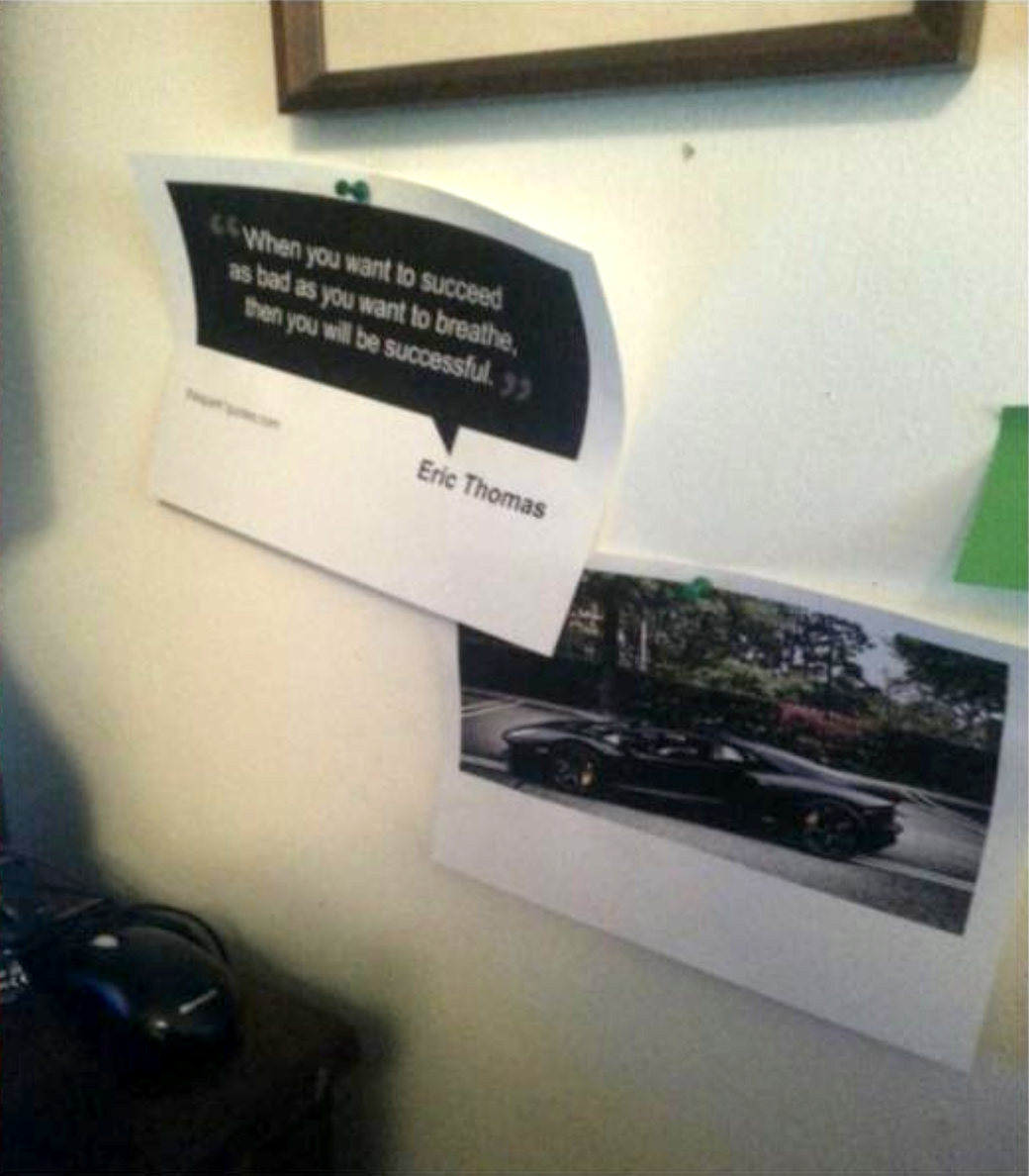
I printed two images and pinned them to the wall beside my desk. One was a line from that video: "When you want to succeed as bad as you want to breathe, then you will be successful." The other was a photograph of my dream car, a Lamborghini Aventador Roadster. To me, supercars have always been more art than car.
The desk had been my great-grandfather's, from his early days at Steptoe & Johnson. I spent those months working at his desk, trying to build a future that no longer included the law.
I had to act.
But wanting that responsibility and knowing how to exercise it were two very different things.
What Failure Leaves Behind
My first serious business idea, which I started while I was still at Marshall, was an online community that tried to compete with Reddit. Users would earn points by participating on the website and redeem those points for discounts, cashback, and other rewards. The business would be supported through affiliate-based advertising. I spent about a year trying to make it work. I might have earned two or three hundred dollars.
Then it failed.
It was my first major experience of spending an enormous amount of effort on something, becoming emotionally committed to it, and finally accepting that it wasn't going to succeed. But I had learned something valuable. I had learned how to generate traffic. As I studied the economics of the platform, I became more interested in the advertising that supported it. I began to wonder whether the advertising business itself offered a better opportunity.
Around that period, I met Kenny through my fraternity at Marshall. We didn't get along particularly well at first, but we quickly became close friends. When I proposed starting an advertising business, several fraternity brothers expressed interest. Some thought it sounded like easy money.
Kenny was the one who actually showed up.
Dad was sending me what money he could through Western Union, primarily so I could afford food. I would stretch it as far as possible, sometimes putting whatever remained into advertising experiments. When I ran out, Kenny would contribute twenty or thirty dollars from his paychecks at Wendy's. Neither of us had money to spare. We tried for several months, but the agency never acquired the resources or traction necessary to succeed, and we accepted that we couldn't keep pursuing it in that form.
I moved on to Amazon Kindle publishing. For roughly five or six months, I worked at a punishing pace, sometimes attempting to write and publish a book every day. I made about $150 in sales, some of which probably came from friends and family trying to be supportive.
Another failure.
I gave up the security job so a friend who had moved to Huntington could take it, but the job I expected to replace it fell through. After a gap, I worked briefly delivering pizza, and later found myself unable to secure another position. As my financial circumstances deteriorated, I applied for food stamps, partly because I knew the office could also help me search for employment. I wish I still had that application. I would frame it—not because there is anything admirable about struggling to afford food, but because I know how much fear and uncertainty stood behind that piece of paper.
At the time, the McDonald's Dollar Menu was cheaper for me than purchasing ingredients at the grocery store. I remember what that kind of desperation feels like.
And yet something important was happening beneath those failures. The community website had taught me about online traffic and affiliate advertising. The agency experiments had taught me more about marketing. The Kindle business had taught me about publishing and selling information. None of those ventures had succeeded. But none of them had left me entirely empty-handed, either. By June 2014, I realized that I had knowledge that other people might find valuable.
I developed a course teaching businesses how to generate exposure through Twitter, as it was then called. Dad lent me $100 to help get the venture started. On June 20, 2014, the course was featured as a product of the day on an online marketplace.
Sales began arriving.
Within about a month, I had generated more than $20,000 in sales. The business continued growing considerably over the months that followed. The experience changed my life. For the first time, I knew that what I had been pursuing was possible. But the larger lesson wasn't simply that perseverance had finally paid off.
The businesses that failed had taught me skills that the successful business required.
I hadn't won because I was willing to fail indefinitely. I had won because I had carried something useful forward from each attempt. Failure does not automatically make you wiser. Some people repeat the same mistakes for decades. The value comes from what you learn, what you change, and what you refuse to repeat.
The Danger of Success
Not long after the course took off, a friend introduced me to someone who claimed to be a major player in the industry. He ended up scamming me out of more than $12,000—a huge share of what the business had earned me in its first six months, after taxes.
Even so, the information-product business I had built remained highly profitable. I decided to walk away from it. The business depended heavily on joint-venture marketing arrangements in which publishers promoted one another's products to their email lists. Over time, I became increasingly uncomfortable with the practices and integrity of some of the people and companies involved. I did not want to continue doing business with them. I understood that ending those relationships would effectively end the business.
I walked away anyway.
It was an intentional decision, and I remain comfortable with the principle behind it. But it also exposed something about the business I had built. A company can generate a great deal of income and still depend on relationships, platforms, or systems that make its future terribly fragile. I hadn't fully understood that.
By the summer of 2015, I was returning to advertising. I also launched a separate e-commerce business that became very successful before encountering problems and closing that autumn. In October 2015, Kenny and I decided to pursue a local advertising agency in Huntington.
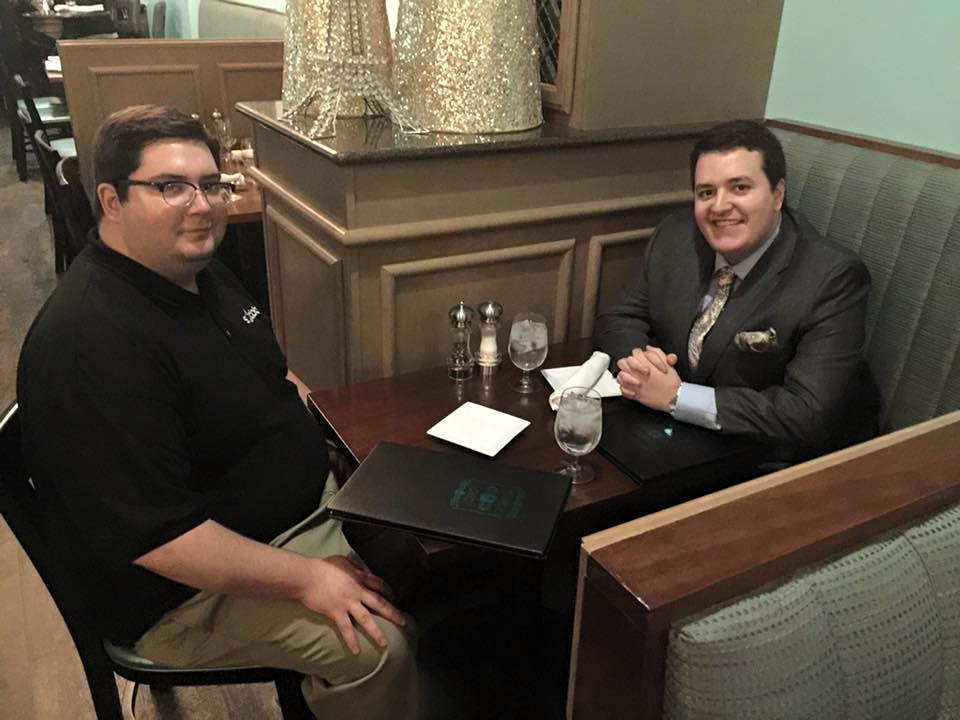
I wanted to build something substantial. We could help local businesses, become involved in the community, and establish a company that might endure. I committed heavily to the idea. I sought out a mentor. I worked on a book about helping local businesses through social media. I signed a commercial lease, purchased office furniture, and set aside money for payroll.
And I got scammed again.
By December, I had committed and lost an enormous amount of capital and credit.
The agency had acquired exactly zero clients.
I had obligations I could not simply walk away from, including a commercial lease, a recently purchased car, and roughly $30,000 in credit-card debt. I remember sitting down with Kenny and explaining that I had about $8,000 left to my name. At the rate things were going, I had perhaps another month or six weeks before I was out of money. Everything I had fought to build seemed to be disappearing.
Kenny suggested that we try selling neckties online. I didn't think the idea would work.
He did.
We tried it. Within the first month or month and a half, the business generated hundreds of thousands of dollars in sales. It saved us from the immediate crisis. Kenny handled much of the work behind the scenes: customer service, order fulfillment, email marketing, and the countless operational responsibilities that came with a rapidly growing store. I focused on advertising. By early 2016, the workload had become so intense that we began hiring aggressively. We even imagined that we might eventually sell the business for millions.
But the same problem was developing again. We had built that revenue on top of a critical dependency we did not control. Our business relied on inexpensive tracked shipping from China, particularly ePacket. When that service stopped working reliably for us, delivery problems became overwhelming. Orders were delayed or lost. Customers demanded refunds. The economics that had made the business attractive began to unravel. By May or June 2016, we recognized that the business was no longer workable. Five of my six employees left as the operation wound down.
Kenny stayed.
He helped me address the customer complaints, locate missing orders, process refunds, and fulfill the obligations that remained. Then we moved forward again. Looking back, I see something that should have been obvious.
I had become exceptionally good at generating income.
I was nowhere near as good at protecting it.
A Million Dollars Is Not a Fortress
After the necktie business ended, Kenny and I went back to advertising. By then I had accumulated years of practical experience, and Kenny had developed the skills to manage campaigns, advise clients, prepare financial reports, and handle much of the operational work. We built a leaner agency. The contrast was remarkable. Despite the necktie operation's far larger sales, the advertising agency generated more profit over the remainder of 2016 than the necktie business had produced after its expenses. In 2017, the agency did about $1 million in business.
We developed valuable client relationships and even received direct support from a representative at Google for our advertising account. It felt as though we had finally figured things out.
That feeling was dangerous. Success had begun to make us comfortable.
The day before Thanksgiving in 2017, our agency lost access to Google Ads. It was the platform on which much of our business depended. We tried repeatedly to restore access. We would not regain it until 2019. The agency was suddenly facing another existential problem. During the difficult months that followed, a misunderstanding between Kenny and me led to a falling-out. For much of 2018, we went our separate ways.
Late that year, I discovered how costly it could be to place trust in the wrong hands. Errors in our books required substantial time and money to correct, and initially we did not know the full extent of the damage. I won't name anyone here. The lesson is larger than any individual: be careful whom you let inside your walls. Not everyone who claims to be on your side is acting in your interests.
By then, most of the people who had worked with me were gone. Kenny was one of the few who knew our bookkeeping history and understood QuickBooks. Despite our falling-out, he returned to help me sort through the records and prepare for the work ahead.
I have never forgotten that Kenny came back.
The broader financial difficulties surrounding that period were severe. I had made more money than I once thought possible, yet much of the liquid wealth I'd accumulated was gone. I had to borrow, work relentlessly, and rebuild under enormous pressure. Then I made matters worse. I began trying to recover some of what I had lost through stock picking. Instead of protecting the capital I had remaining, I lost tens of thousands of dollars more.
I was confronting a danger I had never fully appreciated. Suddenly acquiring substantial wealth can encourage overconfidence. Suddenly losing substantial wealth can encourage desperation. Both can make a capable person a danger to themselves. I had experienced both. This time, the answer was not simply to produce more income.
I needed to become a different person.
The Enemy Inside the Walls
For years, I had concentrated on the exciting parts of business. Generating traffic. Acquiring customers. Increasing sales. Building the next operation. Finding another opportunity. I had neglected much of the work that makes success durable. Accounting. Budgeting. Tax planning. Legal structures. Risk management. Capital preservation. Contingency planning.
The boring things. The things that might have prevented some of my most expensive mistakes.
I think of the question posed in Luke 14:28: who begins building a tower without first calculating whether he has enough to finish it? I had built plenty of towers. I hadn't consistently counted the cost.
By 2019, I began approaching money and business differently. I began treating the financial, legal, and operational foundations of my work as priorities rather than afterthoughts. I wanted to understand them deeply enough that I could recognize weaknesses before they developed into emergencies. That change was not an abandonment of ambition. It was the result of taking my ambition more seriously.
I had treated perseverance as the willingness to recover from whatever happened next. Real perseverance, I learned, also requires reducing the likelihood of being defeated by the same weakness twice.
There was a version of me who could make money quickly but struggled to protect it. That version had served a purpose. He had gotten me out of poverty. He had built businesses when I had almost no resources. But he could not be trusted to build the future I now wanted. He had to change.
You owe no loyalty to the weaknesses of the person you used to be.
This is one of the hardest things to accept about serious ambition. You may have to abandon habits that once helped you survive. You may have to question beliefs you once defended. You may have to admit that your most expensive failures were not entirely the fault of markets, customers, employees, platforms, or bad luck.
Sometimes the enemy inside the walls is your own judgment.
The point is not to hate the person you used to be. The point is to become someone that person could not yet have imagined.
My father used to tell me, "Stay the course." Those words became our family motto: Tene Cursum. I understand them differently today than I did when I was young. Staying the course does not mean refusing to change direction when the road ahead is wrong. It means remaining faithful to the purpose while being willing to change almost everything about how you pursue it.
A plan is a method. It is not a sacred obligation.
Learn Without Paying for Every Lesson
There is another uncomfortable truth about my early failures. Most were probably avoidable. I lacked experience, capital, and sound guidance. Too often I refused to seek out or hire the right mentors. When I did spend money on advice, I was not always discerning enough about the person offering it. Those judgments were mine to make, and I made some of them badly. One of the great advantages of intelligence is the ability to learn from your mistakes. A greater advantage is recognizing mistakes other people have already made, so you don't have to repeat them.
Start by taking inventory of what you actually possess. If you have a skill that gives you an advantage, use it. If a legitimate opportunity appears, investigate it. If a relationship can open a door, earn the introduction, create value for the other person, and walk through it. If someone knows how to solve a problem you have spent months wrestling with, ask for help or hire them. You do not have to follow the path someone else took. You have to recognize the resources and opportunities available to you, then use them intelligently and ethically.
Some advantages are personal: a rare skill, a valuable relationship, a hard-earned understanding of a market. Others are technological. I had nothing like today's AI tools when I was beginning in 2013. Now a person with limited resources can use them to examine a business model, research potential customers, and interrogate assumptions before investing real money. AI can be mistaken, and it cannot replace judgment or competent professional advice. But it can help you ask better questions earlier, when the answers are still inexpensive. I believe tools like these could have shortened some of my earliest struggles.
The goal is not to embrace every fashionable tool or chase every new opportunity. It is to use every honest advantage available to you, and stop insisting on paying full price for lessons someone else has already learned.
The Men Inside the Walls
The cavalry isn't coming does not mean you have to fight alone. I would never have reached this point without people who helped me. Gran opened my eyes to the possibility of directing my own life. He lived long enough to see me earn my GED, succeed academically at Marshall, and begin building something different.
He died in September 2015.
Dad believed in me from the beginning. When I was building my first website, he would use online valuation tools to estimate what it might be worth. The numbers were largely meaningless, but his enthusiasm wasn't. Even after my first successful product began selling, he kept offering to help until I finally asked him to stop. He didn't know how to run my businesses. He wasn't going to solve my problems for me. But he believed that I could solve them.
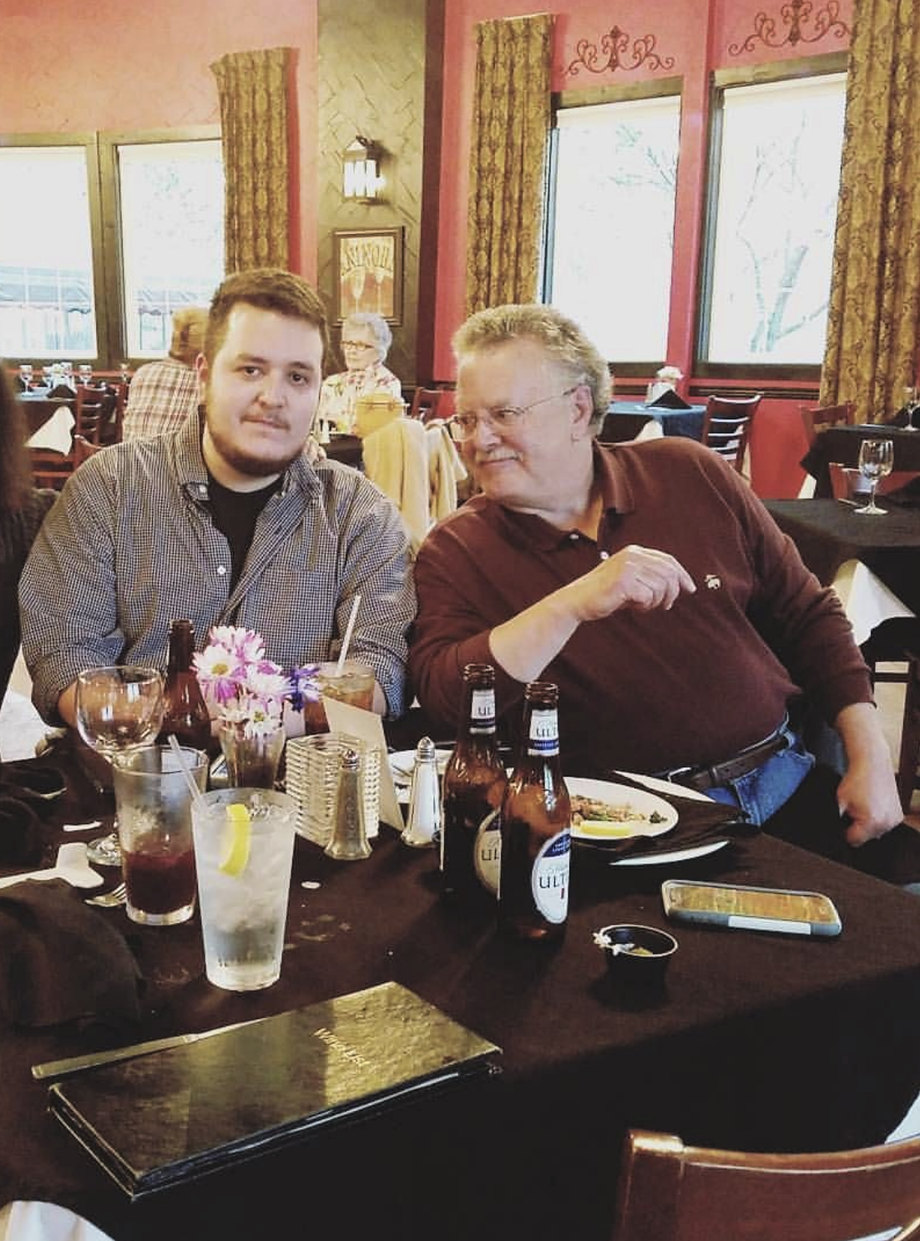
Kenny contributed something different: practical work, technical ability, and a rare willingness to help. He learned quickly, took on unfamiliar responsibilities, and stayed when the work became unpleasant.
In the end, I lost them all.
Dad was diagnosed with an aggressive cancer. His battle lasted only a few months. He fought until the very end. He died in 2022.
After 2018, Kenny and I talked from time to time but largely went our separate ways. My daughter's birth in January 2023 brought us back together, and I named him her godfather. When he later became ill, I visited him in the hospital. We talked about getting "those 2013 vibes again," the feeling of being young and trying to build something from nothing.
I tried to convince him to stay in the hospital, just to be sure he was safe. He insisted on going home to his beloved cat, Luna. I helped him get home.
It was the last time I saw him.
A few weeks after my daughter's birth, Kenny died.
These men are central to my story. But I do not tell you about them to suggest that success requires a particular family, friend, mentor, or benefactor. I tell you because there is a difference between accepting help and waiting to be rescued. Help can make you stronger. It can give you confidence, knowledge, opportunity, and relief when you desperately need it. What it cannot do is assume responsibility for the decisions that determine your life. You must be prepared to move forward even if no help arrives. And those who help you may not be there forever. That is one more reason to take the time you have seriously.
The Price No One Can Calculate for You
There is a cost to extraordinary ambition that people rarely discuss honestly. You may sacrifice money, sleep, leisure, and comfort. Those are the obvious costs. You may also sacrifice friendships. You may spend years watching other people enjoy themselves while you continue working. You may become so consumed by a pursuit that you no longer have much time for the activities that once made you happy. Hunting. Fishing. Hiking. Traveling. Spending an ordinary evening with friends. You may find that the people you love have difficulty understanding the changes in your life. Some relationships may become strained. Others may end.
There may be times when you have less time for your children or your spouse than you wish. If you're a person of faith, as I am, you may find yourself wishing you had more time to participate in your church or in service to others. These are not trivial sacrifices. Nor should they be romanticized. You don't receive a medal for missing your child's childhood. You cannot purchase back an afternoon with someone who has died. And no amount of professional achievement can automatically compensate for the loss of something irreplaceable.
Yet I would be dishonest if I suggested that every great ambition can be pursued without difficult trade-offs. Sometimes the work really does consume years. Sometimes there is no comfortable arrangement in which you retain every pleasure of your present life while constructing an entirely different future.
Sometimes you have to choose.
The question is whether you understand what you're choosing. For me, the possibility of devoting ten or twenty years to building lasting freedom was worth real sacrifice. I wanted control over my time. I wanted to build a life in which my future was not constantly dictated by financial necessity. I wanted to create opportunities for my family and those who came after me. I wanted to contribute something meaningful to my community and country. But I also wanted to discover what I was capable of becoming. That mattered to me independently of the financial outcome.
There is something deeply satisfying about confronting a challenge that appears beyond your present abilities and developing the competence to meet it. I don't mean that suffering itself is desirable. It isn't. I mean that the effort to become capable of doing something difficult can give the pursuit meaning beyond whatever reward may follow.
When you commit to a pursuit like that, you cross a threshold. You can change your methods. You can reconsider your objectives. You can discover that a particular sacrifice is too great and choose differently. But you cannot return to the person you were before the experience changed you, and you cannot recover the years already spent.
You can change how you fight. You cannot recover the time the fight has already cost you.
The Fight Must Be Worth Fighting
I have long been fascinated by last stands and desperate assaults in the face of annihilation. Thermopylae. The Alamo. The Battle of Saragarhi. The final resistance of Napoleon's Imperial Guard at Waterloo. The charge at Shiroyama. Even Pickett's Charge at Gettysburg—not a last stand, but a desperate, catastrophically costly attack against formidable defenses. Their causes were not equivalent, nor were all the decisions behind them wise. What haunts me is the human moment: recognizing that victory may be almost impossible and nevertheless advancing into danger rather than allowing the odds to make the decision for you.
There is something powerful about the limits of human fortitude being tested in full view of defeat. The question is not whether every charge was justified or whether a retreat would have been more intelligent. Often, it would have been. The question is what a person can summon when the situation has become almost unendurable.
The Alamo is particularly haunting to me. I think about determination when the walls have been breached, when the odds keep worsening, and when the people who stood beside you are gone. Determination under favorable conditions is easy to praise. It is a different thing altogether when almost every reason for hope has disappeared. The defenders faced an overwhelming force.
And the Alamo fell.
That's an important part of the story. Courage did not make those men invincible. Their determination did not guarantee victory. That is why the image accompanying this essay means something to me. It is not a promise that you will succeed if you are sufficiently brave. It is a reminder to understand the magnitude of the challenge before you and decide what you are willing to do about it.
There is also a critical difference between their final stand and most of the battles we face in ordinary life. We often have the opportunity to retreat, reconsider, rebuild, and return. We can recognize that a business model no longer works. We can acknowledge that our assumptions were wrong. We can acquire new skills, change our methods, and preserve what remains. We can fight more intelligently. To continue using an approach that has repeatedly failed, simply because changing it would feel like surrender, is not courage.
It is an attachment to being wrong.
You must be ruthless enough to recognize the difference. Ruthless toward your excuses. Ruthless toward your complacency. Ruthless toward the weaknesses in your own thinking. But never so consumed by the pursuit that you abandon the legal, ethical, and moral principles that make your ambitions worth pursuing in the first place.
I have always believed in pursuing success by any honorable means necessary. That includes changing my mind. It includes admitting when I have failed. The past version of yourself is evidence of where you began. It is not a set of instructions for who you must remain.
The Decision Is Yours
I don't know what you want from your life. Perhaps you want to build a business, pursue a demanding profession, create something meaningful, or achieve a degree of freedom that currently seems impossible. Perhaps your ambition has little to do with money. Perhaps you want to become a better parent, make a significant contribution to your community, serve your country, or achieve something that nobody in your family has attempted before. Whatever it is, you owe yourself a serious examination of what pursuing it will require. Not a fantasy about how wonderful the outcome might feel. An examination of the actual cost.
What do you need to learn? What weaknesses have you been unwilling to confront? What are you doing today that is fundamentally incompatible with the future you claim to want? What have you been waiting for someone else to do? And perhaps the most uncomfortable question:
Are you willing to become a different person to achieve what you say matters most to you?
Because your existing habits, assumptions, and priorities have already produced the life you currently possess. If you want a fundamentally different result, something will have to change. That may require sacrificing comforts that you genuinely enjoy. It may require confronting people who do not understand your ambitions. It may require accepting that progress will take longer, cost more, and prove more difficult than you ever imagined. It may require the courage to abandon a plan into which you have already poured years of effort. And it may require acknowledging that some of the greatest obstacles in your path have been created by your own decisions.
Do not mistake this for a promise that you will win. You may not. But the uncertainty of the outcome does not relieve you of the responsibility to decide what you will attempt. Nor does it mean that the only worthwhile life is one of exceptional financial or professional accomplishment. The point is to take your own possibilities seriously enough to make an honest choice about them. If you decide that an ambition is not worth its price, make that decision consciously. If you decide that it is worth the price, stop pretending the price will somehow disappear. Begin preparing to pay it.
Examine your weaknesses. Learn what you do not know. Use the tools available to you. Seek good counsel. Study other people's failures. Protect what you build. Reconsider your assumptions before circumstances force you to reconsider them. And stop waiting for someone to grant you permission to pursue the life you have chosen.
I cannot tell you what you are capable of becoming. Neither can the people who doubt you. And neither, for that matter, can the person you are today.
You may discover that your ambitions exceed your abilities. You may discover that the path you chose was wrong. You may spend years pursuing something only to realize that the true objective was different from the one you originally imagined. Those are possibilities you must accept. But there is a difference between reaching the limits of what you can accomplish and living your entire life without seriously testing them.
One is an outcome.
The other is a choice.
The cavalry isn't coming.
Stay the course.